Health &
Nutrition
Turkish hazelnuts don’t just taste amazing—they’re a treasure trove of essential nutrients. Let’s break down their incredible health benefits, complete with numbers!

Fats That Love Your Heart
- Healthy Fats: About 82% of the fats in Turkish hazelnuts are heart-healthy monounsaturated fats.
- Cholesterol Support: These fats help lower LDL (bad) cholesterol and increase HDL (good) cholesterol, keeping your heart in best health.
Glow Up with Antioxidants
- Vitamin E: A 100g serving of hazelnuts provides 15 mg of Vitamin E, covering 100% of your daily recommended intake.
- Antioxidant Protection: Vitamin E is a powerful antioxidant that helps protect your cells from oxidative stress, promoting youthful skin and reducing the risk of chronic diseases.
- Compared to other tree nuts, hazelnuts provide the most folate (113 µg per 100 g), also known as vitamin B9 or folic acid. Folate is an essential nutrient needed in the process of cell division to make new, healthy cells. It’s especially important for healthy growth and development during pregnancy.
Fibre for Days
- High in Fibre: Turkish hazelnuts offer 10g of dietary fibre per 100g, which is 40% of the recommended daily intake.
- Gut Health: Fibre aids digestion, supports gut health, and helps you feel fuller for longer—great for weight management and keeping your digestive system happy.
Power Up with Plant Protein
- Protein Rich: With 15g of protein per 100g, Turkish hazelnuts are an excellent source of plant-based protein.
- Muscle & Energy: Protein is vital for muscle repair, growth, and maintaining energy levels, making hazelnuts a great post-workout snack or daily protein boost for vegetarians and vegans.
Packed with Essential Minerals
- Magnesium: 100g of hazelnuts contain 163mg of magnesium, which is 40% of your daily requirement—supporting muscle function, energy production, and nerve health.
- Copper & Manganese: These nuts are also rich in copper (providing 85% of your daily intake) and manganese (covering 300% of your daily needs), essential for collagen production and bone health.
Low in Carbs, High on Energy
- Turkish hazelnuts are relatively low in carbohydrates, with only 16g per 100g, making them a great snack for those on a low-carb or ketogenic diet.
Nutrients in 100 g of roasted hazelnuts
Nutrients
Energy
kcal
646
Total fat
g
16-66
Protein
g
15
16:0 palmitic acid
g
5
Carbohydrate
g
18
18:0 stearic acid
g
1
Fiber,total dietary
g
9
18:1 oleic acid
g
80-85
Sugars,total
g
5
18:2 linoleic acid
g
15
MICRONUTRIENTS
Calcium, Ca
mg
122
Vitamin C, ascorbic acid
mg
4
Iron, Fe
mg
4
Thiamin, Vitamin B1
mg
0,3
Magnesium,Mg
mg
173
Riboflavin, Vitamin B2
mg
0,1
Phosphorus,P
mg
310
Niacin
mg
2
Potassium,K
mg
755
Pantothenic acid
mg
1
Zinc,Zn
mg
3
Vitamin B6
mg
0,6
Manganese, Mn
mg
6
Vitamin A
IU
61
Selenium,Se
mcg
4
Vitamin E
mg
15
Phytosterol
mg
110
Cholesterol
mg
0
AMINO ACIDS
Tryptophan
g
0,19
Threonine
g
0,5
Isoleucine
g
0,55
Histicine
g
0,43
Lysine
g
0,42
Alanine
g
0,73
Leucine
g
1,07
Aspartic Acid
g
1,69
Methionine
g
0,22
Glutamic acid
g
3,71
Cystine
g
0,28
Glycine
g
0,73
Phenylalanine
g
0,67
Proline
g
0,58
Tyrosine
g
0,36
Serine
g
0,74
Valine
g
0,71
Arginine
g
2,22
Source: USDA, Agricultural Handbook 8. Composition of Foods Nuts & Seeds Products, June 1999
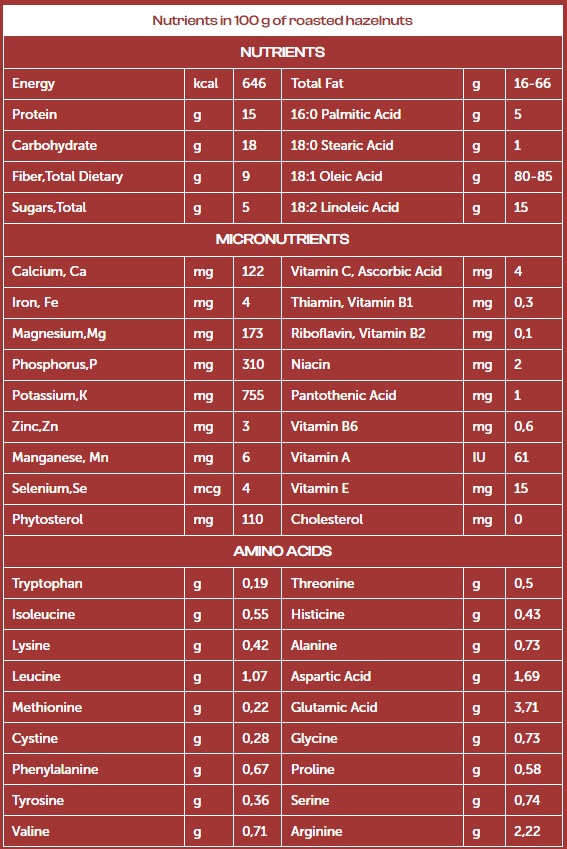
Source: USDA, Agricultural Handbook 8. Composition of Foods Nuts & Seeds Products, June 1999
A Daily Handful of Hazelnuts

Boosts energy
levels

Lowers
cholesterol

Supports healthy
metabolic function

Aids in the prevention of diabetes, heart disease, embolism, and hypertension

Nourishes and enhances skin health

Serves as a vital addition to your daily diet
Turkish Hazelnut Nutrition Facts
Health Benefits It May Support
Vitamins and Minerals
Excellent source of vitamin E, manganese, and copper
Good source of dietary fiber, magnesium, thiamin, and antioxidants

Total body health
Dietary Fiber
1 ounce of hazelnuts (one serving) has
2.7 grams of dietary fiber (10.8% DV)

Weight Maintenance: Keeps hunger at bay
Fats
Highest level (75%) of heart-healthy
monounsaturated fats compared to most tree nuts
Lowest level of saturated fats (7%) among all nuts

Heart Health: Polyunsaturated fatty acids
are effective in controlling blood lipid levels
Positive effects on blood pressure,
cholesterol and blood triatuceride value
Phytosterols
Significant dietary source of phytosterols

Lowers cholesterol:
Reduces the risk of certain cancers
Cholesterol-Free

Heart Health: Reduces risk for
cardiovascular disease
Gluten-Free